A Brief History of Parliamentary Law
Parliamentary law—the system of rules governing meetings and collective decision-making—has evolved over more than two thousand years. Its aim has always been to ensure order, fairness and clarity in group deliberation, principles that emerged in the ancient world and continue to guide modern assemblies today.
Early Origins
The roots of parliamentary practice can be traced to ancient Greece, where the ekklesia (assembly) and boule (council) met to debate public matters according to agreed processes. One of the earliest recorded divisions of an assembly occurred in Sparta, when citizens physically split into two groups to count the vote on whether to go to war with Athens (Thucydides I.87). Gatherings such as these introduced ideas that remain foundational: opportunity to speak, orderly debate, and decisions reached through a defined process of voting.
Anglo-Saxon Foundations
In Anglo-Saxon England, local “moots” and the witenagemot followed similar traditions of speaking in turn and advising the ruler before decisions were announced; the Old English word mōt (or gemōt), meaning “assembly,” is the linguistic ancestor of the modern English word meeting. After the Norman Conquest, these customs developed into the Magnum Concilium and later the English Parliament, which by the thirteenth century had established early versions of motions, debate limits, and recorded votes.
Development Under the British Parliament
The British Parliament became the foundation of modern parliamentary procedure. Between the seventeenth and nineteenth centuries, both Houses formalized their procedures and strengthened the impartial role of the Speaker. Foundational texts such as Sir Thomas Smith’s De Republica Anglorum (1583) and Hatsell’s Precedents of Proceedings in the House of Commons (1776–1796) documented and organized these practices. Through refinement, Parliament transformed from a royal advisory council into a deliberative body governed by rules designed to balance authority, order, and fairness.
Jefferson and the American Adaptation
In the United States, Thomas Jefferson applied these English traditions to republican institutions. As Vice President and presiding officer of the Senate, he compiled A Manual of Parliamentary Practice (1801), the first comprehensive guide to legislative procedure in America. Jefferson’s work emphasized the idea that rules should serve the assembly, not restrain it.
The Creation and Rise of Robert’s Rules of Order
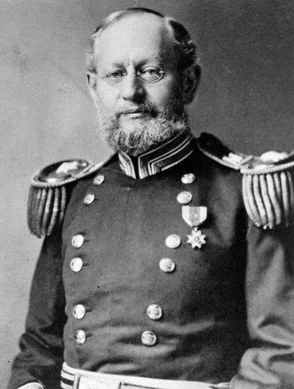
Nearly seventy-five years later, General Henry Martyn Robert, an engineer and U.S. Army officer, sought to bring procedural order to community and church meetings across a growing republic. His 1876 Pocket Manual of Rules of Order for Deliberative Assemblies—later known as Robert’s Rules of Order—translated the complexity of parliamentary law into a clear framework accessible to ordinary citizens. Successive editions have refined and expanded the work, and Robert’s Rules of Order Newly Revised remains the dominant authority in North American parliamentary practice.
Lasting Framework for Deliberation
From the Athenian agora to today’s nonprofit boards and civic councils, parliamentary procedure has evolved from local custom to universal standard. Through the contributions of Jefferson and General Robert, it has become a practical system for ensuring that collective decisions are made efficiently and fairly, allowing assemblies of every size to deliberate with order and legitimacy.